Blue Business Card Design Layout: A Strategic Evaluation for Modern Branding
In the landscape of professional networking, the business card remains a tangible touchpoint that often defines the first impression of a brand. Among the various aesthetic choices available, the Blue Business Card Design Layout has emerged as a dominant choice for professionals seeking to convey reliability, trust, and modernity. This specific design approach is not merely about selecting a color; it involves a structured philosophy of visual communication where cool tones are balanced with clean lines and functional typography.
When evaluating this layout style, one must look beyond the surface appeal of the hue. A well-executed blue design relies on a sophisticated understanding of CMYK color schemes, ensuring that the printed result matches the digital vision. The distinctiveness of this layout lies in its versatility. Whether applied to personal identity or corporate branding, the blue palette offers a neutral yet engaging backdrop that allows other elements, such as logos and contact information, to stand out without overwhelming the viewer. For those considering a multipurpose template, the availability of fully customizable files in formats like INDD (Adobe InDesign) provides a level of control that pre-made graphics cannot match.
Distinguishing Features of the Blue Business Card Design Layout
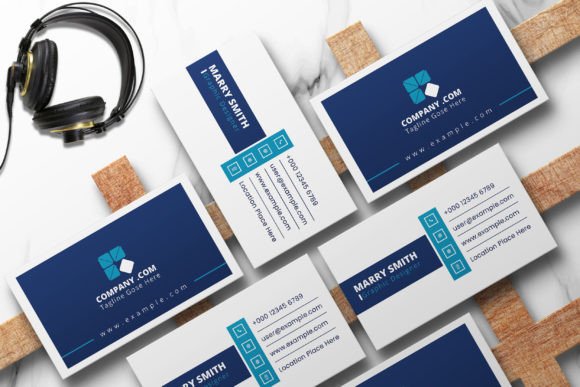
The core strength of the Blue Business Card Design Layout is its inherent balance between professionalism and approachability. Unlike warm colors that can sometimes feel aggressive or overly casual depending on the shade, blue occupies a psychological middle ground. It signals stability and competence, making it an ideal choice for industries ranging from finance and technology to healthcare and creative services. The layout typically utilizes a clean, modern structure that prioritizes readability and hierarchy.
A critical component of this design system is the adherence to print-ready standards. A high-quality layout, such as the one described in premium templates, includes specific technical specifications: 3.5 x 2 inch dimensions, precise trim and bleed guidelines, and a CMYK color profile. These details are often overlooked by amateur designers but are essential for a successful physical product. When a design is print-ready, it eliminates the risk of white edges appearing after cutting or colors shifting unexpectedly during the printing process. Furthermore, the inclusion of free fonts within the documentation ensures that the final output maintains its intended typography without requiring expensive licensing fees, a practical consideration for startups and freelancers alike.
Comparative Analysis: Versus Traditional and Trend-Driven Alternatives
To understand where the Blue Business Card Design Layout fits, it is necessary to compare it against other prevailing styles. The market generally offers two main alternatives: traditional minimalism and bold, trend-driven designs.
Traditional Minimalism often relies on black and white or grayscale palettes. While this approach is timeless and universally safe, it can sometimes lack the personality required to differentiate a brand in a crowded market. The Blue Business Card Design Layout offers a similar level of cleanliness and order but introduces a subtle layer of character through color psychology. It retains the "clean" aspect of traditional designs while avoiding the starkness that can make a card feel cold or impersonal.
Trend-Driven Designs, conversely, may utilize vibrant gradients, neon accents, or complex geometric patterns. While these styles are visually striking, they carry a higher risk of dating quickly. A design that feels trendy today may appear outdated within a year. The blue layout, particularly when executed with a clean and modern aesthetic, strikes a balance. It is contemporary enough to feel fresh but classic enough to remain relevant for years. Additionally, the emphasis on a "multipurpose" nature means the layout is adaptable. It can serve as a calling card for a launch event, an invite for a conference, or a standard professional tool without requiring a complete redesign.
Evaluating Technical Capabilities and Customization
One of the most significant factors in choosing a design resource is the ease of editing. Many users hesitate to purchase templates because they fear the learning curve associated with professional software. However, the Blue Business Card Design Layout is specifically engineered to be user-friendly. The inclusion of editable INDD files means that users with even basic proficiency in Adobe InDesign can modify text, swap images, and adjust colors.
This flexibility extends to the color scheme itself. While the default configuration uses a professional blue palette, the CMYK setup allows for easy adjustments. If a brand's primary color is navy rather than sky blue, the template can be adapted instantly. The presence of a help file documentation further bridges the gap between a static image and a dynamic tool. This documentation often includes links to the free fonts used, ensuring that the typography remains consistent across different devices. For a designer or a business owner managing their own branding, this "100% editable" feature is a crucial asset, reducing reliance on external vendors for minor updates.
Strategic Fit: When to Choose This Layout
Selecting the right design is a strategic decision based on the intended use case. The Blue Business Card Design Layout is particularly well-suited for scenarios where trust and clarity are paramount. For instance, in the financial sector, a card that looks chaotic or overly artistic might undermine the message of fiscal responsibility. Here, the clean, modern structure of the blue layout reinforces the brand's commitment to order and precision.
Similarly, for personal identity projects, such as a portfolio launch or a networking event, this layout provides a polished foundation. The ability to include trim and bleed guidelines ensures that the final product looks as professional as it did on the screen. This is especially important for individuals who are self-publishing or using online printing services that require strict adherence to file specifications. The instant download capability also makes this option viable for last-minute needs, such as preparing materials for an upcoming trade show or a client meeting.
Limitations and Decision Factors
While the Blue Business Card Design Layout offers numerous advantages, it is not a universal solution. One limitation to consider is the potential for overuse. Because blue is a popular choice in corporate design, there is a risk of the card blending into the background if the execution lacks unique branding elements. To mitigate this, users must ensure that their logo and typography are distinctive enough to stand out against the blue background.
Furthermore, the requirement for Adobe InDesign (INDD format) presents a barrier for those who do not have access to this software or prefer simpler tools like Canva or Microsoft Word. While the customization options are superior in InDesign, they demand a certain level of technical skill. Users who prioritize absolute simplicity over deep customization might find other formats more suitable, even if they offer less flexibility. Additionally, the effectiveness of the design depends heavily on the quality of the paper stock selected for printing. A beautiful digital layout will lose its impact if printed on thin, flimsy material. Therefore, the investment in the design must be paired with a commitment to high-quality printing standards.
Conclusion on Suitability
The decision to adopt the Blue Business Card Design Layout ultimately rests on the specific goals of the individual or organization. It is an excellent choice for those seeking a balance between modern aesthetics and professional credibility. Its strengths lie in its clean structure, print-ready specifications, and the freedom it offers for customization. By providing a solid framework that supports both personal and corporate identities, it serves as a versatile tool for advertising, events, and general branding.
However, it requires a willingness to engage with professional design software and an understanding of print production nuances. For those willing to invest the time to customize the template, the result is a cohesive and impactful piece of collateral that elevates the brand identity. As with any design choice, the key is alignment with the overall brand strategy. If the goal is to project stability, clarity, and a forward-thinking approach, the blue layout stands out as a compelling and effective option in the current marketplace.